Designated Activity No. 40 is a status of residence that allows foreign nationals with sufficient assets to stay in Japan for an extended period while engaging in tourism, recreation, cultural experiences, and similar activities. Short-term visits for ordinary tourism are in many cases limited to 90 days per entry, and in practice around 180 days per year is often used as a rough guideline. By contrast, Designated Activity No. 40 initially grants a period of stay of six months, and with renewal you may remain in Japan for up to one year.
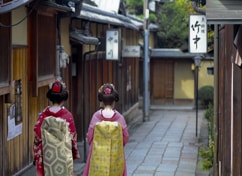
Studying the tea ceremony in Kyoto, resting at a hot-spring resort, traveling through Japan at a relaxed pace, or spending unhurried time in Japan with family and friends—these are the kinds of stays the so-called long-stay visa for high-net-worth individuals is designed for. You may not work for income in Japan, but the category is highly practical for stays focused on tourism, lessons, wellness, and relaxation.
Even after a full year in Japan, you may depart Japan once and, if you again meet the requirements, file a new application and aim for another one-year long stay. For those who want to enjoy Japan as one of their life bases, Designated Activity No. 40 is a realistic and attractive option.
What Designated Activity Nos. 40 and 41 Allow
Among the statuses of residence under "Designated Activity," long-term stays for tourism, recreation, and similar purposes are split into Designated Activity No. 40 for the principal applicant and Designated Activity No. 41 for an accompanying spouse. Guidance from the Immigration Services Agency and the Ministry of Foreign Affairs outlines requirements along the following lines.
- Who may apply: Nationals of visa-waiver countries and regions who are 18 years of age or older
- Purpose of stay: Tourism, recreation, and other activities of a similar nature
- Period of stay: Six months; the stay may be extended on approval up to a maximum of one year
- Employment: Activities that generate income in Japan are not permitted
- Spouse: A spouse accompanying a No. 40 holder may apply under No. 41
- Children: This scheme does not permit accompanying children
For the latest list of eligible countries and regions and further details, see the Immigration Services Agency's guidance and the Ministry of Foreign Affairs guidance. In real applications, however, what often matters is not only whether you fit the formal requirements, but also how clearly you explain your asset documents, insurance materials, and planned stay.
Two Critical Requirements: Proof of Assets and Health Insurance
For Designated Activity No. 40, the review focuses especially on whether you can demonstrate bank deposits and savings equivalent to at least 30 million yen and whether you hold medical insurance covering your intended period of stay. These are not mere box-ticking items; they are the core evidence used to assess whether you can stay in Japan safely and comfortably for an extended period.
1. Proof of assets of 30 million yen or more
At the time of application, you must show that the combined deposits and savings of the applicant and spouse convert to at least 30 million yen in Japanese currency. Where spouses travel and live together in Japan and the spouse applies as Designated Activity No. 41, the couple's deposits may be aggregated.
It is important to understand that a balance certificate alone may be insufficient. Immigration authorities and embassies commonly request documentation that shows the current balance plus transaction history for the past six months. The aim is to rule out funds borrowed at the last minute—so-called "show money." Screenshots from online banking or copies of web passbooks may be accepted where the account holder's name, balance, transaction history, and latest movement are clear.
It does not mean that the balance must always have been above 30 million yen from six months before the application. If you had a large inflow midway through—for example from a property sale, liquidation of investments, retirement pay, or sale of a business—you may still have a path forward if you can attach reasonable evidence of the source of funds. This is where experience with actual immigration practice makes a difference.
2. Medical insurance covering death, injury, and illness
You must enroll in private medical insurance that covers death, injury, and illness during your stay in Japan. MOFA guidance lists proof of medical insurance—for example overseas travel accident insurance covering the planned stay—as required documentation for visa applications.
Wherever possible, we recommend taking out insurance before you travel to Japan. The Japanese authorities are strongly concerned about long-term visitors remaining uninsured if they fall ill or have an accident. Some products—Taiwan's "e您遊" is one example—cannot be purchased after arrival or assume enrollment before departure.
If you are already in Japan without coverage, consider insurance aimed at residents abroad or travelers. SafetyWing Nomad Insurance, for instance, is sometimes considered a relatively affordable option. Coverage, eligible countries and ages, waiting periods, and treatment of pre-existing conditions vary by product, so before applying, make sure the policy certificate and terms clearly show coverage for death, injury, and illness.
When a spouse accompanies you
When a spouse applies as Designated Activity No. 41, shares a residence in Japan with the No. 40 holder, and engages in tourism and similar activities, there is usually no need to prove a separate 30 million yen solely in the spouse's name. The couple demonstrates 30 million yen or more on a combined basis.
If both spouses use this scheme separately (not as principal and accompanying spouse), combined deposits equivalent to at least 60 million yen are required. A No. 41 spouse may not enter Japan before the No. 40 holder.
Limits of DIY Applications and How Our Office Can Help
Designated Activity No. 40 can in some cases be applied for directly at a Japanese embassy or consulate in your home country. In practice, however, some posts advise applicants to obtain a Certificate of Eligibility (COE) in Japan first.
A COE is advance confirmation by the regional immigration office that your planned activities qualify for a status of residence and that you meet landing requirements. Having a COE generally makes it easier to proceed with a visa application at an overseas Japanese mission. Note that a COE does not guarantee that a visa will be issued.
At Heritage Administrative Scrivener Office, Miyazaki provides COE application support in Japan. We organize asset documents, medical insurance, your stay plan, and the spouse's accompanying relationship into an application package that immigration officers can readily understand. If you have substantial movements in your six-month transaction history, hold assets across multiple accounts or currencies, or wish to apply on a combined basis as a couple, please consult us early.
Process When You Instruct Our Office
1. Preliminary preparation
First, send us bank data, online banking screenshots, balance certificates, proof of medical insurance enrollment, policy terms, passport details, and similar materials by email. We review the content, draft the application form, statement of reasons, and itinerary table, and send you a PDF for review before finalizing, with revisions as needed.
2. Application day
On the day of the COE application, in principle the applicant must be in Japan. Bring your original passport and meet Miyazaki at the Osaka Immigration Office, the Kyoto branch office, or another agreed location. You will sign on site, and we will file the application together. You present your original passport at filing, but it is normally returned the same day, so you do not have to leave your passport with immigration during the review period.
3. After approval
After approval, we email you the electronic Certificate of Eligibility (e-COE). You present that e-COE to the Japanese embassy or consulate in your country to obtain your visa, then receive your residence card when you are granted landing permission at a Japanese airport.
4. Fees
Applications filed at immigration in Osaka or Kyoto: 260,000 yen (consumption tax and disbursements included)
For offices farther away, travel expenses and daily allowances apply additionally. We confirm the filing location and schedule in advance and give you a total estimate.
Required Documents (Checklist)
The following are the main documents for a Designated Activity No. 40 application. If a spouse applies under No. 41, additional items such as a marriage certificate and proof of relationship to the No. 40 applicant are typically required. We attach Japanese translations to materials in foreign languages.
- Passport
- Application form (prepared by our office)
- Photograph (4 cm × 3 cm)
- Itinerary / stay plan table (prepared by our office)
- Passbook or equivalent for the past six months (showing current balance and credits and debits; 30 million yen or more, spousal aggregation permitted)
- Proof of medical insurance covering the period of stay (covering death, injury, and illness)
The key is whether immigration can understand your case quickly. Even with a sufficient balance, unclear account names, currency, reasons for transactions, or insurance coverage may trigger requests for further explanation. We organize the materials down to which documents should serve as the core evidence and which should be used as supplementary explanations.
Designated Activity No. 40: Outcomes Depend on Quality of Preparation
The long-stay visa for high-net-worth individuals looks simple on paper. In practice, many applicants struggle with how to present assets, how to explain six months of transactions, which insurance to choose, how to build an itinerary, spouse arrangements, and whether to pursue a COE.
If you want your year in Japan to start with confidence, consult us before you apply. We assist from practical questions such as "Are these bank documents enough?", "Is insurance I can buy after arrival acceptable?", and "Can we aggregate 30 million yen as a couple?"
Discuss a Designated Activity No. 40 application
If you plan to file for a COE in Osaka or Kyoto, you are welcome to inquire even before gathering bank and insurance documents—we will outline the most efficient order of preparation.